jī机qì器fān翻yì译jìn近shí十nián年jìn进bù步hěn很kuài快,yě也dài带lái来yí一gè个wèn问tí题:fān翻yì译gōng工jù具yǐ已jīng经hěn很hǎo好yòng用le了,rén人hái还xū需bù不xū需yào要xué学wài外yǔ语?zhè这ge个wèn问tí题kě可yǐ以yòng用liǎng两duàn段lì历shǐ史hé和jǐ几ge个jù具tǐ体de的xiàn限zhì制lái来huí回dá答。
Machine translation has improved fast over the past decade, and that brings a question: the tools are already good, so do people still need to learn a foreign language? The question can be answered with two pieces of history and a few specific limits.
Машинный перевод за последние десять лет быстро прогрессировал, и это порождает вопрос: инструменты уже хороши, так нужно ли ещё учить иностранный язык? На него можно ответить двумя эпизодами истории и несколькими конкретными ограничениями.
xiān先kàn看dì第yī一duàn段lì历shǐ史。1954 nián年,měi美guó国qiáo乔zhì治dūn敦dà大xué学hé和guó国jì际shāng商yè业jī机qì器gōng公sī司yī一qǐ起gōng公kāi开zuò做le了yī一cì次yǎn演shì示。yī一tái台jì计suàn算jī机bǎ把liù六shí十jù句é俄yǔ语fān翻yì译chéng成le了yīng英yǔ语。
First, a piece of history. In 1954 Georgetown University and IBM held a public demonstration together. A computer translated sixty Russian sentences into English.
Сначала первый эпизод истории. В 1954 году Джорджтаунский университет и IBM вместе провели публичную демонстрацию. Компьютер перевёл шестьдесят русских предложений на английский.
dāng当shí时de的yán研jiū究zhě者shuō说,fān翻yì译zhè这ge个wèn问tí题sān三dào到wǔ五nián年jiù就néng能jiě解jué决。
The researchers of the time said the translation problem would be solved within three to five years.
Тогдашние исследователи говорили, что проблема перевода будет решена за три-пять лет.
dàn但shí实jì际shàng上yòng用le了dà大yuē约qī七shí十nián年。zhēn真zhèng正de的biàn变huà化chū出xiàn现zài在 2016 nián年qián前hòu后。yǐ以qián前de的xì系tǒng统shì是yí一gè个cí词yí一gè个cí词dì地huàn换,hòu后lái来gǎi改yòng用shén神jīng经wǎng网luò络de的fāng方fǎ法,xiān先lǐ理jiě解zhěng整jù句huà话de的yì意si思,zài再chóng重xīn新shuō说chū出lái来,yì译wén文zhì质liàng量yī一xià下zi子hǎo好le了hěn很duō多。
In fact it took about seventy years. The real change came around 2016. Earlier systems swapped one word for another; later they switched to neural-network methods, first understanding the meaning of the whole sentence and then producing it anew, and translation quality rose sharply.
На деле ушло около семидесяти лет. Настоящая перемена произошла примерно в 2016 году. Прежние системы заменяли слово за словом; затем перешли к методам нейросетей: сначала понимается смысл всего предложения, потом оно порождается заново, — и качество перевода резко выросло.
jiù就rì日cháng常shēng生huó活lái来shuō说,xiàn现zài在de的gōng工jù具què确shí实gòu够yòng用le了。kàn看shuō说míng明shū书、diǎn点cài菜、liǎo了jiě解xīn新wén闻,dōu都bù不yòng用zì自jǐ己huì会nà那mén门yǔ语yán言。zhè这yī一diǎn点méi没yǒu有rén人fǎn反duì对。
For everyday life the tools are genuinely enough. Reading a manual, ordering food, following the news require no command of the language yourself. Nobody disputes this.
Для повседневной жизни инструментов действительно хватает. Прочитать инструкцию, заказать еду, понять новость можно, не владея самим языком. Против этого никто не возражает.
dàn但zài在bié别de的dì地fāng方,gōng工jù具hái还yǒu有hěn很duō多xiàn限zhì制。dì第yī一lèi类xiàn限zhì制chū出zài在wén文zì字shàng上。
But elsewhere the tools still have many limits. The first class of limit lies in the text.
Но в других местах у инструментов ещё много ограничений. Первый класс ограничений связан с текстом.
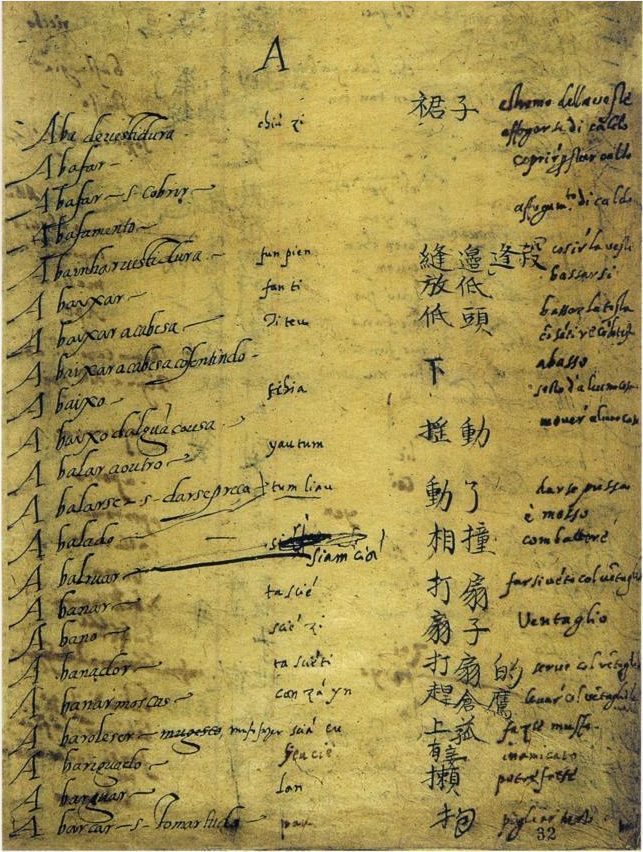
běn本wén文de的pèi配tú图shì是《pú葡hàn汉cí辞diǎn典》de的dì第yī一yè页。zhè这běn本cí词diǎn典shì是lì利mǎ玛dòu窦hé和luó罗míng明jiān坚dà大yuē约zài在 1583 nián年yú于zhōng中guó国guǎng广dōng东xiě写chéng成de的,shōu收le了dà大yuē约liù六qiān千gè个cí词tiáo条,shì是mù目qián前yǐ已zhī知zuì最zǎo早yóu由ōu欧zhōu洲rén人xiě写chū出lái来de的hàn汉yǔ语cí词diǎn典。
The illustration to this article is the first page of the Portuguese–Chinese dictionary. It was written by Matteo Ricci and Michele Ruggieri in Guangdong, China, around 1583, holds about six thousand entries, and is the earliest known Chinese dictionary written by Europeans.
Иллюстрация к этой статье — первая страница португальско-китайского словаря. Он был составлен Маттео Риччи и Микеле Руджери в Гуандуне, Китай, около 1583 года, содержит примерно шесть тысяч статей и является старейшим известным китайским словарём, составленным европейцами.
zhè这běn本cí词diǎn典xiě写wán完yǐ以hòu后yī一zhí直méi没yǒu有chū出bǎn版,cháng长qī期cún存fàng放zài在luó罗mǎ马de的dàng档àn案guǎn馆lǐ里。1934 nián年tā它bèi被chóng重xīn新fā发xiàn现,zhí直dào到 2001 nián年cái才zhèng正shì式yìn印chū出lái来。
After it was finished the dictionary was never published; for a long time it was kept in an archive in Rome. It was rediscovered in 1934 and printed only in 2001.
После завершения словарь так и не был издан; долгое время он хранился в архиве в Риме. Его вновь обнаружили в 1934 году и напечатали лишь в 2001-м.
liǎng两wèi位zuò作zhě者huā花le了hǎo好jǐ几nián年shí时jiān间zuò做zhè这běn本cí词diǎn典,mù目dì的bú不shi是chá查cí词,ér而shì是néng能hé和zhōng中guó国rén人shuō说huà话。
The two authors spent several years on this dictionary, not in order to look words up, but in order to be able to talk with Chinese people.
Двое авторов потратили на этот словарь несколько лет — не для того, чтобы искать слова, а чтобы иметь возможность разговаривать с китайцами.
dì第èr二lèi类xiàn限zhì制shì是méi没yǒu有duì对yìng应cí词de的cí词。zhōng中wén文de的「xīn辛kǔ苦le了」zài在yīng英yǔ语hé和é俄yǔ语lǐ里dōu都zhǎo找bu不dào到wán完quán全yī一yàng样de的shuō说fǎ法,「shàng上huǒ火」「yuán缘fèn分」「bù不hǎo好yì意si思」yě也shì是zhè这yàng样。duì对zhè这xiē些cí词,fān翻yì译gōng工jù具gěi给chū出de的shì是jiě解shì释,ér而bú不shi是yí一gè个yī一yàng样de的shuō说fǎ法。
A second class of limit is words that have no equivalent. Chinese 辛苦了 has no exactly matching expression in English or Russian, and the same is true of 上火, 缘分 and 不好意思. For such words a translation tool gives an explanation, not a matching expression.
Второй класс ограничений — слова без эквивалента. У китайского 辛苦了 нет полностью совпадающего выражения ни в английском, ни в русском; так же обстоит с 上火, 缘分 и 不好意思. Для таких слов инструмент перевода даёт объяснение, а не совпадающее выражение.
dì第sān三lèi类xiàn限zhì制hé和yǔ语yán言de的jié结gòu构yǒu有guān关。zhōng中wén文bù不yòng用zhuān专mén门de的xíng形shì式biǎo表shì示shí时tài态,hái还cháng常cháng常shěng省lüè略zhǔ主yǔ语。bǐ比rú如「míng明tiān天qù去」,shì是shuí谁qù去、qián前miàn面fā发shēng生le了shén什me么,dōu都yào要kào靠shàng上xià下wén文lái来pàn判duàn断。zhǐ只kàn看yī一jù句huà话de的gōng工jù具,zhǐ只néng能cāi猜。
A third class of limit concerns the structure of the language. Chinese does not use a special form to mark tense, and it often omits the subject. In 明天去, for instance, who is going and what came before must be inferred from context. A tool that sees only one sentence can only guess.
Третий класс ограничений касается структуры языка. В китайском нет особой формы для обозначения времени, и часто опускается подлежащее. Например, в 明天去 то, кто идёт и что было раньше, приходится выводить из контекста. Инструмент, видящий лишь одно предложение, может только гадать.
hái还yǒu有yī一lèi类xiàn限zhì制,hé和zài在shén什me么qíng情kuàng况xià下shǐ使yòng用yǒu有guān关。bǐ比rú如zài在miàn面shì试、shàng上kè课hé和shāng商wù务tán谈pàn判de的shí时hou候,yī一huì会er儿yòng用yī一xià下fān翻yì译ruǎn软jiàn件,huì会dǎ打duàn断zhèng正cháng常de的jiāo交liú流,yòng用qǐ起lai来qí其shí实bù不tài太fāng方biàn便。
There is also a class of limit that depends on where the tool is used. In a job interview, a class or a business negotiation, for example, breaking off to use a translation app interrupts the normal exchange, and it is in fact not very convenient.
Есть и класс ограничений, зависящий от того, где инструмент применяется. Например, на собеседовании, на занятии или на деловых переговорах то и дело обращаться к приложению-переводчику прерывает нормальное общение, и на деле это не очень удобно.
zài在zhì制dù度shàng上,qíng情kuàng况dào到xiàn现zài在yě也méi没yǒu有biàn变。zhōng中guó国de的dà大xué学lù录qǔ取wài外guó国xué学sheng生,hái还shi是yào要kàn看 HSK chéng成jì绩;shēn申qǐng请gōng工zuò作qiān签zhèng证hé和jū居liú留xǔ许kě可,yě也yào要yǒu有zhèng正shì式de的yǔ语yán言néng能lì力zhèng证míng明。fān翻yì译gōng工jù具bù不néng能tì替rén人qù去kǎo考shì试。
Institutionally, the situation has not changed to this day. Chinese universities still admit foreign students on the basis of HSK results; applying for a work visa or a residence permit still requires formal proof of language ability. A translation tool cannot sit an exam in someone's place.
На институциональном уровне положение до сих пор не изменилось. Китайские вузы по-прежнему принимают иностранных студентов по результатам HSK; для рабочей визы и вида на жительство также нужно официальное подтверждение владения языком. Инструмент перевода не может сдать экзамен за человека.
zōng综hé合lái来kàn看,mù目qián前bǐ比jiào较wěn稳tuǒ妥de的zuò做fǎ法shì是zhè这yàng样:bǎ把bān搬yùn运xìng性de的gōng工zuò作jiāo交gěi给gōng工jù具,bǐ比rú如chá查cí词、chǔ处lǐ理zhǎng长wén文zhāng章、xiě写chū出chū初gǎo稿;bǎ把pàn判duàn断hé和jiāo交liú流liú留gěi给rén人。pàn判duàn断shì是zhǐ指néng能kàn看chū出yì译wén文lǐ里de的cuò错wù误,jiāo交liú流shì是zhǐ指ràng让duì对huà话kě可yǐ以yī一zhí直jìn进xíng行xià下qù去。
Taken together, the safer arrangement at present is this: hand the carrying work to the tools — looking words up, getting through long texts, producing a first draft — and leave judgment and contact to people. Judgment means being able to spot the errors in a translation; contact means keeping a conversation going at all.
В совокупности более надёжный подход сегодня таков: перенос отдать инструментам — поиск слов, обработку длинных текстов, черновик, — а суждение и общение оставить людям. Суждение — это умение заметить ошибки в переводе; общение — это то, что позволяет разговору вообще продолжаться.
hái还méi没yǒu有dá答àn案de的shì是xià下yī一bù步。rú如guǒ果shí实shí时de的yǔ语yīn音fān翻yì译zài在sù速dù度hé和shēng声yīn音shàng上gèng更jiē接jìn近zhēn真rén人duì对huà话,「xué学huì会yī一mén门wài外yǔ语」de的yì意si思huì会bù不huì会yě也gēn跟zhe着gǎi改biàn变?1954 nián年nà那xiē些yán研jiū究zhě者yǐ以wéi为sān三nián年néng能jiě解jué决de的wèn问tí题,zuì最hòu后zài在tā他men们nà那yī一dài代yě也méi没yǒu有zuò做wán完。
What has no answer yet is the next step. If real-time speech translation comes still closer to a real human conversation in speed and voice, will the meaning of knowing a foreign language change along with it? The problem the researchers of 1954 thought three years away was, in the end, not finished in their generation.
Без ответа остаётся следующий шаг. Если синхронный речевой перевод по скорости и звучанию ещё больше приблизится к разговору с живым человеком, изменится ли вместе с этим и смысл выражения «выучить иностранный язык»? Задача, которую исследователи 1954 года считали делом трёх лет, в их поколении так и не была завершена.

Discussion · 0
It’s quiet in here… suspiciously quiet. Say something 👀