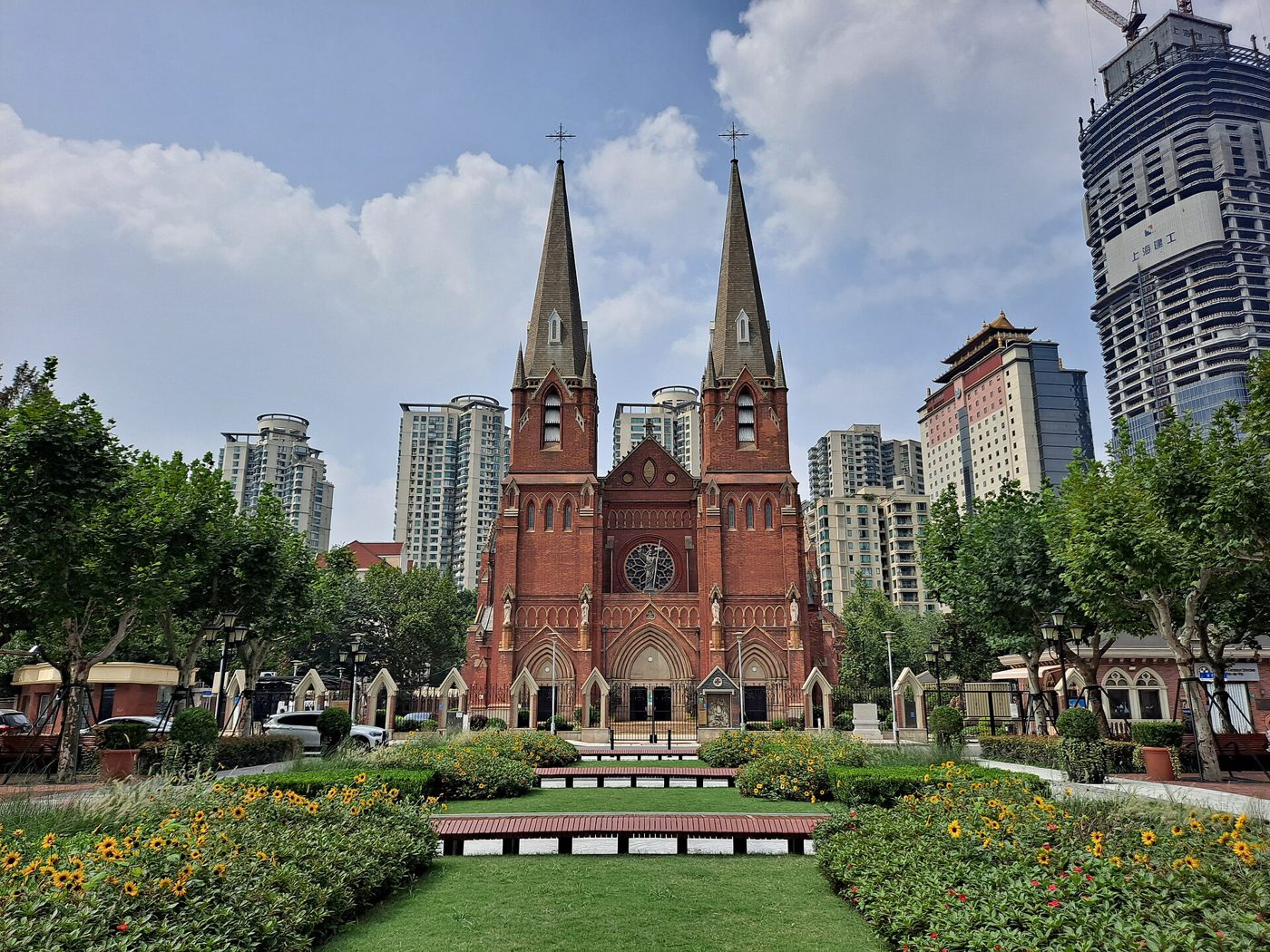
zài在shàng上hǎi海xú徐jiā家huì汇shāng商yè业qū区de的zhōng中xīn心,dì地tiě铁chū出kǒu口páng旁biān边lì立zhe着liǎng两zuò座hóng红sè色de的zhuān砖tǎ塔,nà那jiù就shì是xú徐jiā家huì汇tiān天zhǔ主táng堂。zhōu周wéi围dōu都shì是shāng商chǎng场、xiě写zì字lóu楼hé和sān三tiáo条dì地tiě铁xiàn线de的huàn换chéng乘zhàn站。
At the centre of Shanghai's Xujiahui commercial district, beside a metro exit, stand two red brick towers — that is St Ignatius Cathedral. All around are shopping centres, offices and an interchange of three metro lines.
В центре шанхайского делового района Сюйцзяхуэй, рядом с выходом из метро, стоят две краснокирпичные башни — это и есть собор Святого Игнатия. Вокруг — торговые центры, офисы и пересадочный узел трёх линий метро.
zhè这ge个dì地míng名hé和yī一wèi位míng明dài代de的guān官yuán员yǒu有guān关。「xú徐jiā家huì汇」de的yì意si思shì是xú徐jiā家rén人zhù住de的dì地fāng方,liǎng两tiáo条hé河zài在zhè这lǐ里jiāo交huì汇。zhè这lǐ里de的「xú徐」,zhǐ指de的jiù就shì是xú徐guāng光qǐ启。
The place name goes back to a Ming official. Xujiahui means the place where the Xu family lived, where two rivers meet. The Xu here is Xu Guangqi.
Это название восходит к минскому чиновнику. «Сюйцзяхуэй» означает место, где жил род Сюй, где сходятся две реки. «Сюй» здесь — это Сюй Гуанци.
xú徐guāng光qǐ启(1562—1633)shì是míng明dài代de的guān官yuán员,yě也shì是zuì最zǎo早xìn信tiān天zhǔ主jiào教de的zhōng中guó国dú读shū书rén人zhī之yī一。1607 nián年,tā他hé和yì意dà大lì利chuán传jiào教shì士lì利mǎ玛dòu窦yī一qǐ起,bǎ把ōu欧jǐ几lǐ里dé得《jǐ几hé何yuán原běn本》de的qián前liù六juǎn卷fān翻yì译chéng成le了zhōng中wén文。
Xu Guangqi (1562–1633) was a Ming official and among the first Chinese scholars to become Catholic. In 1607, together with the Italian missionary Matteo Ricci, he translated the first six books of Euclid's Elements into Chinese.
Сюй Гуанци (1562–1633) был минским чиновником и одним из первых китайских учёных, принявших католичество. В 1607 году вместе с итальянским миссионером Маттео Риччи он перевёл на китайский первые шесть книг «Начал» Евклида.
jīn今tiān天zhōng中wén文lǐ里de的「jǐ几hé何」「píng平xíng行xiàn线」「sān三jiǎo角xíng形」zhè这xiē些cí词,hěn很duō多dōu都shì是nà那cì次fān翻yì译dìng定xià下lái来de的,yī一zhí直yòng用dào到xiàn现zài在。
Many of the terms in today's Chinese — geometry, parallel lines, triangle — were fixed by that translation and are still in use.
Многие термины современного китайского — «геометрия», «параллельные прямые», «треугольник» — закрепились именно тем переводом и используются до сих пор.
xú徐guāng光qǐ启qù去shì世yǐ以hòu后zàng葬zài在zhè这lǐ里,jiā家rén人yě也zhù住zài在fù附jìn近,dì地míng名jiù就zhè这yàng样bǎo保liú留le了xià下lai来。tā他de的mù墓xiàn现zài在zài在guāng光qǐ启gōng公yuán园lǐ里,cóng从jiào教táng堂zǒu走guò过qù去dà大yuē约shí十fēn分zhōng钟。
Xu Guangqi was buried here after his death and his family lived nearby, which is how the name survived. His tomb is now in Guangqi Park, about ten minutes' walk from the cathedral.
После смерти Сюй Гуанци похоронили здесь, его семья жила поблизости — так и сохранилось название. Его могила теперь в парке Гуанци, примерно в десяти минутах ходьбы от собора.
zhè这zuò座jiào教táng堂shì是shí十jiǔ九shì世jì纪zhōng中qī期kāi开shǐ始jiàn建de的。1847 nián年,yē耶sū稣huì会de的chuán传jiào教shì士bǎ把xú徐jiā家huì汇dìng定wèi为tā他men们zài在shàng上hǎi海de的huó活dòng动zhōng中xīn心,1851 nián年jiàn建chéng成le了dì第yī一zuò座jiào教táng堂。xuǎn选zài在zhè这lǐ里,hé和xú徐guāng光qǐ启jiā家de的tǔ土dì地yǒu有zhí直jiē接guān关xi系。
The church was begun in the middle of the nineteenth century. In 1847 the Jesuit missionaries made Xujiahui their base in Shanghai, and in 1851 they completed a first church. The choice of this site was directly tied to the Xu family's land.
Строить эту церковь начали в середине XIX века. В 1847 году иезуиты сделали Сюйцзяхуэй своей базой в Шанхае, а в 1851-м завершили первую церковь. Выбор этого места был прямо связан с землями семьи Сюй.
yuán原lái来de的jiào教táng堂tài太xiǎo小,1905 nián年kāi开shǐ始chóng重xīn新jiàn建,1910 nián年jiàn建chéng成,tóng同nián年 10 yuè月 23 rì日jǔ举xíng行le了zhù祝shèng圣yí仪shì式。
The original church was too small; rebuilding began in 1905, was completed in 1910, and a consecration was held on 23 October of that year.
Прежняя церковь была слишком мала: перестройку начали в 1905 году, завершили в 1910-м, и 23 октября того же года прошло освящение.
xīn新de的jiàn建zhù筑shì是zhuān砖qì砌dī的gē哥tè特shì式,liǎng两zuò座tǎ塔lóu楼gāo高yuē约liù六shí十mǐ米,kě可yǐ以róng容nà纳liǎng两qiān千wǔ五bǎi百rén人,dāng当shí时bèi被chēng称wéi为「yuǎn远dōng东dì第yī一dà大jiào教táng堂」。shè设jì计de的shì是yī一wèi位yīng英guó国jiàn建zhù筑shī师,jiàn建zào造de的shì是fǎ法guó国yē耶sū稣huì会,yòng用de的shì是běn本dì地de的zhuān砖hé和zhōng中guó国de的gōng工jiàng匠。
The new building is brick Gothic; its two towers are about sixty metres high and it seats 2,500. In its day it was called the greatest cathedral in the Far East. A British architect designed it, French Jesuits built it, and it used local brick and Chinese craftsmen.
Новое здание — кирпичная готика; две башни высотой около шестидесяти метров, вмещает две с половиной тысячи человек. В своё время его называли крупнейшим собором Дальнего Востока. Спроектировал его британский архитектор, строили французские иезуиты, использовались местный кирпич и китайские мастера.
jiào教táng堂páng旁biān边hái还yǒu有liǎng两chù处jī机gòu构,míng名qì气méi没yǒu有tǎ塔lóu楼nà那me么dà大,dàn但yě也shì是zhè这yī一shí时qī期jiàn建lì立de的。dì第yī一chù处shì是 1847 nián年jiàn建de的xú徐jiā家huì汇cáng藏shū书lóu楼,shì是shàng上hǎi海zuì最zǎo早de的jìn近dài代tú图shū书guǎn馆。zhè这lǐ里de的zhōng中wén文shū书hé和xī西wén文shū书fēn分kāi开cún存fàng放,lián连shū书jià架de的yàng样zi子yě也bù不yī一yàng样。
Two more institutions stand beside the cathedral, less famous than the towers but also founded in this period. The first is the Bibliotheca Zi-Ka-Wei, built in 1847, Shanghai's earliest modern library. Here the Chinese and Western books are shelved separately, and even the shelves are of different kinds.
Рядом с собором есть ещё два учреждения, менее известные, чем башни, но того же времени. Первое — библиотека Сикавэй, построенная в 1847 году, старейшая современная библиотека Шанхая. Здесь китайские и западные книги хранятся раздельно, и даже стеллажи разного вида.
dì第èr二chù处shì是 1872 nián年jiàn建de的xú徐jiā家huì汇guān观xiàng象tái台,zhǔ主yào要guān观chá察tiān天qì气,tè特bié别yǐ以yù预bào报tái台fēng风chū出míng名。shí十jiǔ九shì世jì纪mò末,dōng东hǎi海hé和cháng长jiāng江kǒu口de的chuán船,dōu都kào靠zhè这ge个tái台fā发chū出de的tái台fēng风xìn信hào号。
The second is the Zikawei Observatory, built in 1872, which mainly observed the weather and was famous above all for forecasting typhoons. At the end of the nineteenth century, ships in the East China Sea and the mouth of the Yangtze all relied on the typhoon signals it sent out.
Второе — обсерватория Сикавэй, построенная в 1872 году, которая в основном наблюдала за погодой и была известна прежде всего прогнозом тайфунов. В конце XIX века суда в Восточно-Китайском море и в устье Янцзы полагались на штормовые сигналы, которые она подавала.
èr二shí十shì世jì纪de的biàn变huà化,zài在zhè这zuò座jiàn建zhù筑shàng上yě也kàn看de得chū出lái来。wén文huà化dà大gé革mìng命qī期jiān间,liǎng两zuò座tǎ塔lóu楼zài在 1966 nián年bèi被chāi拆diào掉;jiào教táng堂zài在 1979 nián年chóng重xīn新kāi开fàng放,tǎ塔lóu楼zài在 1980 nián年àn按yuán原lái来de的yàng样zi子chóng重xīn新jiàn建hǎo好。
The changes of the twentieth century can be seen on the building too. During the Cultural Revolution the two towers were pulled down in 1966; the church reopened in 1979, and in 1980 the towers were rebuilt in their original form.
Перемены XX века тоже видны на этом здании. В годы Культурной революции обе башни снесли в 1966 году; церковь снова открылась в 1979-м, а в 1980-м башни отстроили в прежнем виде.
jiào教táng堂xiàn现zài在hái还zài在shǐ使yòng用,píng平shí时zuò做mí弥sa撒,zhōu周mò末lái来de的rén人bǐ比jiào较duō多。lǎo老zhào照piàn片lǐ里,jiào教táng堂zhōu周wéi围běn本lái来yǒu有dà大piàn片de的tián田hé和hé河,xiàn现zài在dōu都bù不jiàn见le了。
The cathedral is still in use, with masses on ordinary days and more people at weekends. In old photographs there were once wide fields and rivers around the cathedral; now they are all gone.
Собор действует и сегодня: по будням служат мессы, по выходным людей больше. На старых фотографиях вокруг собора когда-то были широкие поля и река; теперь их не осталось.
zhè这yī一dài带zuì最zhí值de得kàn看de的,shì是gè各gè个shí时qī期de的dōng东xi西jǐ挤zài在yī一qǐ起:tóng同yī一tiáo条jiē街shang上,yǒu有shí十jiǔ九shì世jì纪de的zhuān砖qiáng墙、èr二shí十shì世jì纪de的shū书kù库hé和èr二shí十yī一shì世jì纪de的bō玻li璃dà大lóu楼。màn慢màn慢zǒu走wán完zhè这tiáo条jiē街,dà大yuē约yào要sì四shí十fēn分zhōng钟。
What is most worth seeing in this area is how different eras are packed together: on one street stand nineteenth-century brick walls, a twentieth-century book stack and twenty-first-century glass towers. Walking the street slowly from end to end takes about forty minutes.
Самое интересное в этом квартале — как соседствуют разные эпохи: на одной улице стоят кирпичные стены XIX века, книгохранилище XX и стеклянные высотки XXI. Чтобы неспешно пройти эту улицу из конца в конец, нужно около сорока минут.

Discussion · 0
It’s quiet in here… suspiciously quiet. Say something 👀