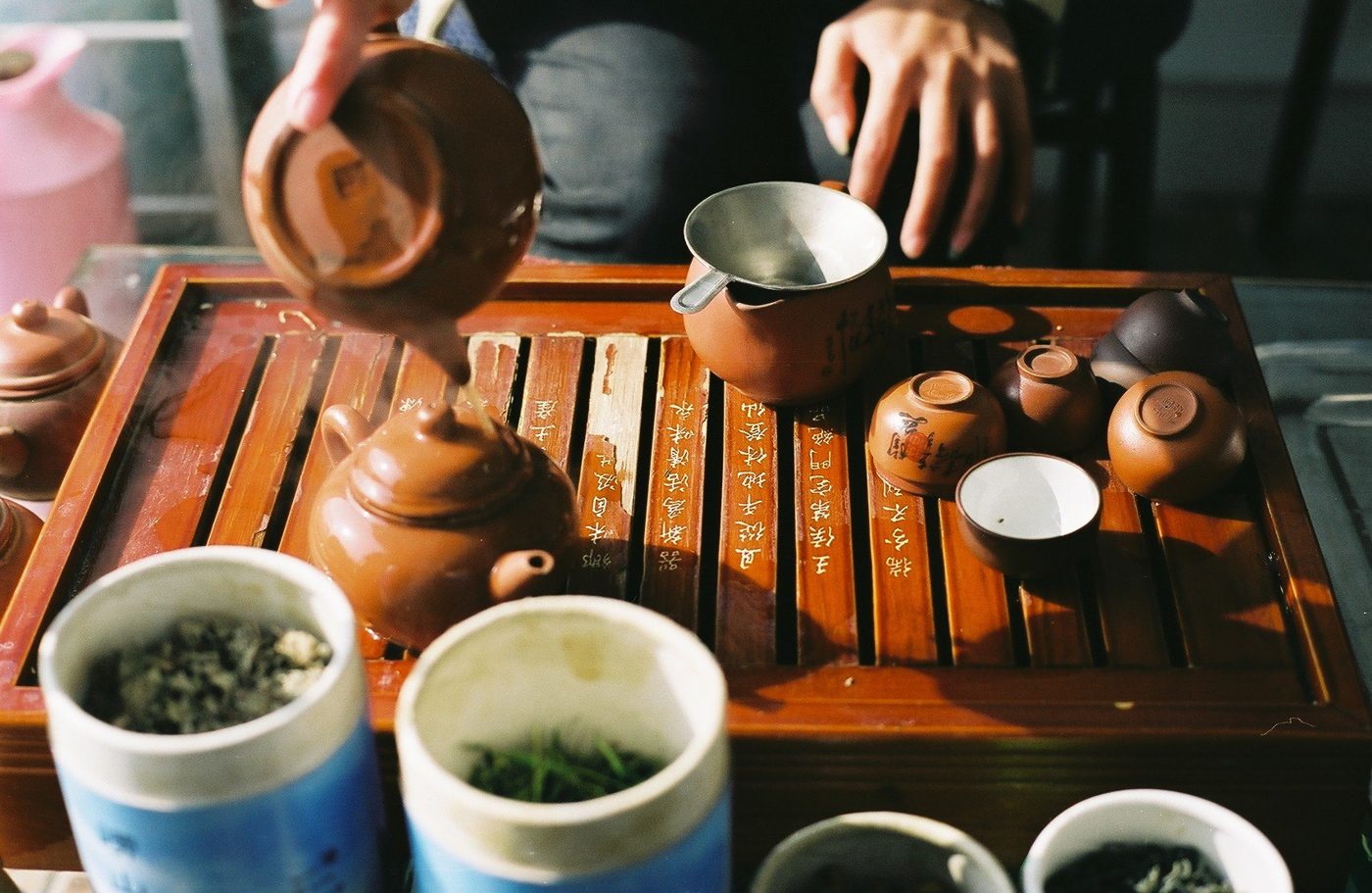
zài在zhōng中guó国,kè客rén人dào到liǎo了jiā家lǐ里,zhǔ主rén人hěn很duō多shí时hòu候xiān先gěi给tā他dào倒yī一bēi杯chá茶。
In China, when a guest arrives at the home, the host very often pours them a cup of tea first.
В Китае, когда гость приходит в дом, хозяин очень часто первым делом наливает ему чашку чая.
chá茶bēi杯bù不dào倒mǎn满,dào倒dào到qī七fēn分jiù就hǎo好。
The cup is not filled to the top; pouring it to about seven tenths is right.
Чашку не наполняют доверху — наливают примерно на семь десятых.
wèi为shén什me么zhǐ只dào倒qī七fēn分?zhōng中guó国yǒu有yī一jù句lǎo老huà话:chá茶qī七fàn饭bā八jiǔ酒shí十fēn分。yì意si思shì是:chá茶dào倒dào到qī七fēn分,fàn饭dào倒dào到bā八fēn分,jiǔ酒kě可yǐ以dào倒mǎn满。
Why only seven tenths? There is an old Chinese saying: tea seven, rice eight, wine full. It means: pour tea to seven tenths, rice to eight tenths, and wine may be filled to the brim.
Почему только семь десятых? Есть старая китайская поговорка: чай — семь, рис — восемь, вино — доверху. Она значит: чай наливают на семь десятых, рис — на восемь, а вино можно налить доверху.
dào倒qī七fēn分,hái还yīn因wèi为chá茶shì是rè热de的。dào倒dé得tài太mǎn满,kè客rén人bù不hǎo好ná拿,chá茶yě也róng容yì易sǎ洒chū出lái来。
Pouring only seven tenths is also because the tea is hot. If it is too full, the guest cannot hold it well, and the tea spills easily.
Наливают на семь десятых ещё и потому, что чай горячий. Если налить слишком полно, гостю неудобно держать, и чай легко расплескать.
bié别ren人gěi给kè客rén人dào倒chá茶de的shí时hou候,kè客rén人kě可yǐ以yòng用liǎng两gè个shǒu手zhǐ指qiāo敲yī一qiāo敲zhuō桌zi子。
When someone pours for the guest, the guest can tap the table with two fingers.
Когда кто-то наливает гостю, гость может постучать по столу двумя пальцами.
zhè这shì是shuō说「xiè谢xie谢」,bù不shuō说huà话yě也kě可yǐ以。rén人duō多de的shí时hou候,bié别ren人zài在shuō说huà话,kè客rén人yě也bù不yòng用tíng停xià下lái来shuō说xiè谢xie谢。
This says thank you; it works without speaking. When there are many people and others are talking, the guest does not have to stop to say thanks.
Это означает «спасибо», и можно обойтись без слов. Когда людей много и другие говорят, гостю не нужно прерываться, чтобы сказать спасибо.
zhè这lǐ里yǒu有yí一gè个lǎo老gù故shì事。chuán传shuō说qīng清cháo朝yǒu有yí一gè个huáng皇dì帝,chū出mén门de的shí时hou候bù不xiǎng想ràng让bié别ren人zhī知dào道tā他shì是huáng皇dì帝。
There is an old story here. Legend says a Qing-dynasty emperor, when travelling, did not want others to know he was the emperor.
С этим связана старая история. По преданию, один император династии Цин, отправившись в путь, не хотел, чтобы люди узнали в нём императора.
tā他gěi给shēn身biān边de的rén人dào倒le了chá茶。nà那gè个rén人bù不néng能gěi给huáng皇dì帝guì跪xia下xiè谢xie谢,jiù就yòng用shǒu手zhǐ指zài在zhuō桌zi子shàng上「guì跪」le了yī一xià下。
He poured tea for an attendant beside him. Unable to kneel to thank the emperor, the man knelt with his fingers on the table instead.
Он налил чай слуге рядом. Тот не мог встать на колени перед императором в благодарность и «преклонил колени» пальцами на столе.
zhè这ge个gù故shì事shì是zhēn真shi是jiǎ假,méi没yǒu有rén人zhī知dào道。dàn但shì是zhè这yàng样zuò做de的rén人,dào到jīn今tiān天hái还yǒu有。
Whether the story is true or false, nobody knows. But people who do this are still around today.
Правда это или нет, никто не знает. Но люди, которые так делают, есть и сегодня.
zài在guǎng广dōng东,hē喝chá茶de的shí时hou候,hái还néng能kàn看dào到hěn很duō多rén人zhè这yàng样qiāo敲zhuō桌zi子。
In Guangdong, over tea, one can still see many people tap the table like this.
В Гуандуне за чаем и сейчас можно увидеть, как многие так стучат по столу.
dào倒chá茶hái还yǒu有yí一gè个xiǎo小guī规ju矩:chá茶hú壶de的zuǐ嘴bù不yào要duì对zhe着kè客rén人。hěn很duō多lǎo老rén人jué觉de得,duì对zhe着rén人bù不tài太kè客qi气。
Pouring tea has one more small rule: the teapot's spout should not point at a guest. Many older people feel that pointing it at someone is not very polite.
При разливании чая есть ещё одно небольшое правило: носик чайника не должен смотреть на гостя. Многие пожилые считают, что направлять его на человека невежливо.
chī吃fàn饭de的shí时hou候yě也yī一yàng样:xiān先gěi给bié别ren人dào倒chá茶,zì自jǐ己de的chá茶fàng放dào到zuì最hòu后。
At a meal it is the same: pour for others first, and leave one's own tea for last.
За едой так же: сначала наливают другим, а себе — в последнюю очередь.
zhuō桌zi子shàng上zuì最xiǎo小de的rén人,gěi给dà大jiā家dào倒chá茶。
The youngest person at the table pours for everyone.
Самый младший за столом наливает всем.
hái还yǒu有yī一jiàn件shì事,jīn今tiān天hěn很shǎo少kàn看dào到le了。yǐ以qián前,zhǔ主rén人ná拿qǐ起zì自jǐ己de的chá茶bēi杯,yì意si思jiù就shì是「jīn今tiān天jiù就dào到zhè这lǐ里」,kè客rén人yào要zǒu走le了。zhè这jiào叫「duān端chá茶sòng送kè客」。
One more thing, rarely seen today: in the past, when the host picked up his own cup, it meant that was enough for today and the guest was to leave. This was called seeing a guest off with tea.
Ещё одно, сегодня встречается редко: раньше, когда хозяин брал свою чашку, это означало «на сегодня довольно», и гостю следовало уходить. Это называлось «проводить гостя чаем».
xiàn现zài在méi没yǒu有rén人zhè这yàng样zuò做le了。dàn但shì是zhè这sì四gè个zì字hái还zài在,kàn看lǎo老shū书、kàn看lǎo老diàn电yǐng影de的shí时hou候,hái还huì会kàn看dào到tā它。
Nobody does this now, but the four characters survive; they turn up in old books and old films.
Сейчас так никто не делает, но эти четыре иероглифа остались — они встречаются в старых книгах и старых фильмах.
zhè这xiē些xiǎo小shì事dōu都bù不nán难。dàn但shì是zuò做le了,bié别ren人huì会jì记zài在xīn心li里。zhè这bǐ比shuō说shí十jù句kè客qi气huà话hái还hǎo好。
None of these small things is hard, but doing them is remembered — it is worth more than ten polite sentences.
Всё это несложно, но это запоминают — и это дороже десяти вежливых фраз.

Discussion · 0
It’s quiet in here… suspiciously quiet. Say something 👀