zài在zhōng中guó国,shèng圣dàn诞jié节bú不shi是gōng公gòng共jià假rì日。shí十èr二yuè月èr二shí十wǔ五hào号,dà大jiā家zhào照cháng常shàng上bān班shàng上xué学。
Christmas is not a public holiday in China. On 25 December everyone goes to work and to school as usual.
Рождество в Китае не выходной. 25 декабря все идут на работу и в школу как обычно.
fàng放jià假de的shì是yuán元dàn旦,yī一yuè月yī一hào号。suǒ所yǐ以zhōng中guó国rén人shuō说「guò过jié节」de的shí时hou候,xīn心li里xiǎng想de的cháng常cháng常shì是xīn新nián年,bú不shi是shèng圣dàn诞。
The holiday is New Year's Day, 1 January. So when people in China talk about the coming holiday, they usually mean the new year, not Christmas.
Выходной — Новый год, 1 января. Поэтому, говоря о празднике, китайцы обычно имеют в виду Новый год, а не Рождество.
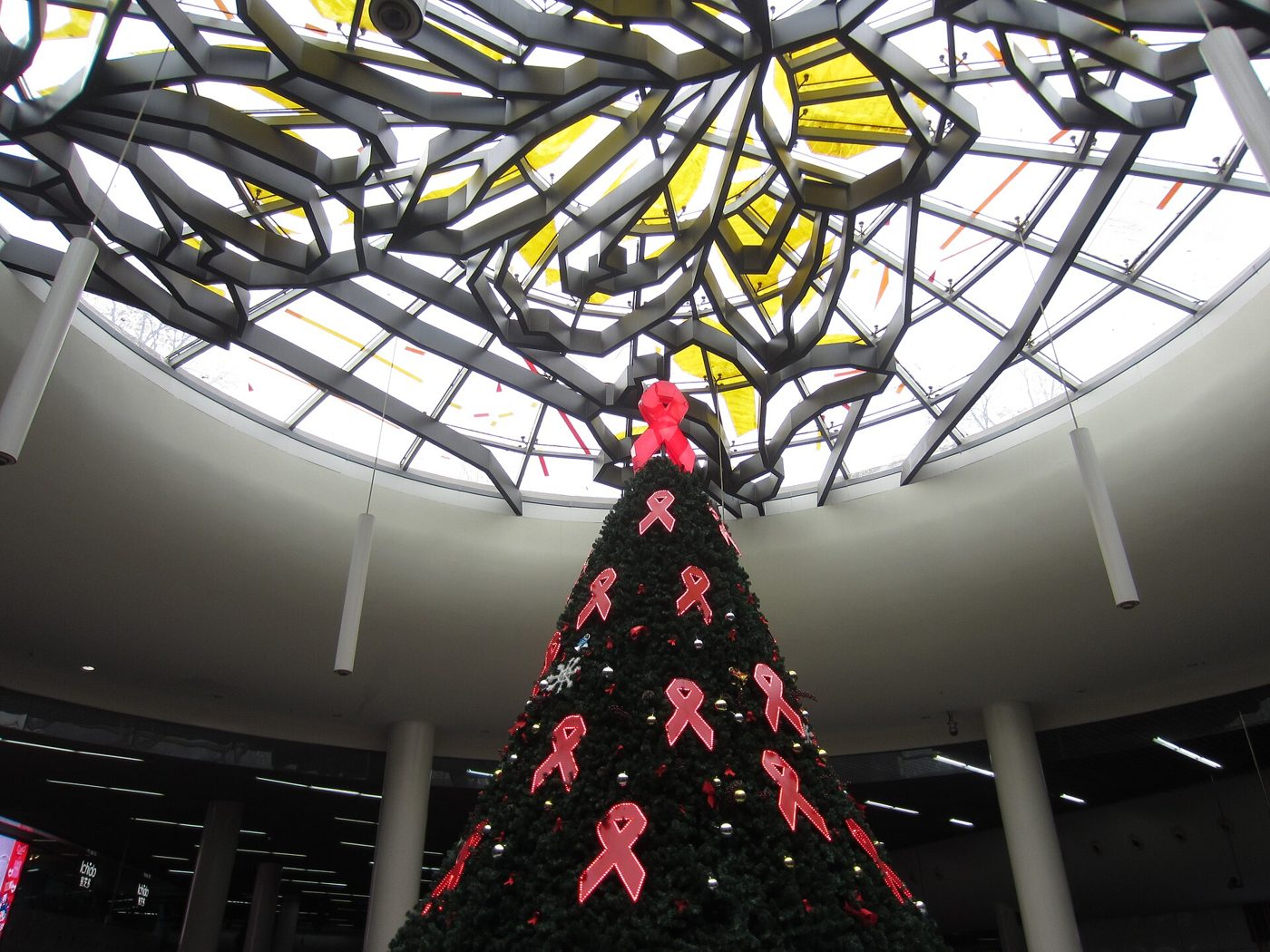
bù不guò过zài在dà大chéng城shì市,shí十èr二yuè月de的shāng商chǎng场hěn很rè热nao闹,dào到chù处shì是dēng灯hé和shù树。nián年qīng轻rén人cháng常cháng常zài在èr二shí十sì四hào号wǎn晚shang上yī一qǐ起chī吃fàn饭、kàn看diàn电yǐng影。
Even so, the malls in big cities are lively in December, full of lights and trees. Young people often go out to dinner and a film on the evening of the 24th.
И всё же в декабре торговые центры больших городов оживлены, всюду огни и ёлки. Молодёжь часто идёт 24-го вечером в ресторан и в кино.
yǒu有yí一gè个zhōng中guó国tè特yǒu有de的xí习guàn惯:píng平ān安yè夜sòng送píng苹guǒ果。yīn因wèi为「píng苹guǒ果」de的「píng苹」hé和「píng平ān安」de的「píng平」tīng听qi起lai来yī一yàng样。
There is a custom peculiar to China: giving apples on Christmas Eve. The píng of apple sounds the same as the píng of peace.
Есть чисто китайский обычай: дарить яблоки в сочельник. «Пин» в слове «яблоко» звучит так же, как «пин» в слове «покой».
suǒ所yǐ以shāng商diàn店lǐ里huì会mài卖bāo包zhe着cǎi彩zhǐ纸de的píng苹guǒ果,jiào叫「píng平ān安guǒ果」,yí一gè个néng能mài卖dào到shí十jǐ几èr二shí十kuài块。zhè这ge个xí习guàn惯shì是zuì最jìn近èr二shí十jǐ几nián年cái才yǒu有de的,zuì最zǎo早shì是zài在dà大xué学lǐ里liú流xíng行qǐ起lai来de的。
Shops therefore sell apples wrapped in coloured paper, called peace fruit, at ten or twenty yuan each. The custom is only a couple of decades old and started in universities.
Поэтому в магазинах продают яблоки в цветной бумаге — «плоды покоя», по десять-двадцать юаней за штуку. Обычаю всего пара десятилетий, и пошёл он из университетов.
zhè这lǐ里yǒu有yī一jiàn件hěn很duō多rén人bù不zhī知dào道de的shì事:quán全shì世jiè界de的shèng圣dàn诞zhuāng装shì饰,hěn很dà大yī一bù部fen分shì是zhōng中guó国zuò做de的,zhǔ主yào要lái来zì自zhè浙jiāng江de的yì义wū乌。
Here is something many people do not know: a large share of the world's Christmas decorations is made in China, most of it in Yiwu, in Zhejiang.
Вот чего многие не знают: значительная часть мировых рождественских украшений производится в Китае, главным образом в Иу, провинция Чжэцзян.
yì义wū乌yǒu有yí一gè个hěn很dà大de的xiǎo小shāng商pǐn品shì市chǎng场,jǐ几wàn万gè个tān摊wèi位,mài卖de的dōng东xi西cóng从niǔ纽kòu扣dào到shèng圣dàn诞shù树dōu都yǒu有。ōu欧zhōu洲hé和měi美guó国shāng商diàn店lǐ里de的cǎi彩qiú球、cǎi彩dēng灯、shèng圣dàn诞lǎo老rén人,hěn很duō多shì是cóng从nà那li里fā发chū出qù去de的。
Yiwu has an enormous small-commodities market, tens of thousands of stalls, selling everything from buttons to Christmas trees. Many of the baubles, lights and Santas in European and American shops were shipped from there.
В Иу огромный рынок мелких товаров — десятки тысяч торговых мест, от пуговиц до ёлок. Многие шары, гирлянды и Санта-Клаусы в европейских и американских магазинах отправлены оттуда.
yǒu有yì意si思de的dì地fāng方zài在zhè这lǐ里:zuò做zhè这xiē些dōng东xi西de的gōng工rén人,dà大bù部fen分zì自jǐ己bù不guò过shèng圣dàn诞jié节。duì对tā他men们lái来shuō说,nà那shi是yī一pī批dìng订dān单,liù六yuè月jiù就yào要zuò做wán完,jiǔ九yuè月yào要zhuāng装chuán船。
The interesting part: most of the workers who make them do not celebrate Christmas. To them it is an order to be finished by June and loaded onto ships by September.
Любопытно вот что: большинство рабочих, которые всё это делают, Рождество не празднуют. Для них это заказ, который надо закончить к июню и погрузить на суда к сентябрю.
zhè这jǐ几nián年,yǒu有de的dì地fāng方bù不zài再bàn办dà大xíng型de的shèng圣dàn诞huó活dòng动,shāng商chǎng场lǐ里de的zhuāng装shì饰yě也bǐ比qián前xiē些nián年shào少le了yī一xiē些。suǒ所yǐ以nǐ你zài在zhōng中guó国kàn看dào到de的shèng圣dàn诞jié节,kě可néng能měi每gè个chéng城shì市dōu都bù不tài太yī一yàng样。
In recent years some places have stopped holding large Christmas events, and there are fewer decorations in the malls than there were. So the Christmas you see in China may look different from city to city.
В последние годы кое-где перестали проводить большие рождественские мероприятия, и украшений в торговых центрах стало меньше. Так что Рождество в разных китайских городах может выглядеть по-разному.
duì对jī基dū督tú徒lái来shuō说,zhè这yī一tiān天de的chóng重diǎn点dāng当rán然bù不zài在shāng商chǎng场。jiào教táng堂nà那jǐ几tiān天huì会yǒu有bào报jiā佳yīn音hé和píng平ān安yè夜de的lǐ礼bài拜,yǒu有de的jiào教táng堂cóng从shí十èr二yuè月chū初jiù就kāi开shǐ始zhǔn准bèi备chàng唱shī诗。
For Christians the point of the day is of course not in the mall. Churches hold carolling and a Christmas Eve service, and some begin choir rehearsals in early December.
Для христиан суть дня, разумеется, не в торговом центре. В церквях поют колядки и служат в сочельник, а кое-где хор начинает репетировать с начала декабря.
lǐ礼bài拜de的shí时jiān间hé和fù复huó活jié节yī一yàng样,yào要tí提qián前wèn问。píng平ān安yè夜nà那yī一cháng场rén人zuì最duō多,qù去wǎn晚le了zhǐ只néng能zhàn站zhe着。
As at Easter, ask about times in advance. The Christmas Eve service is the fullest; arrive late and you will be standing.
Как и на Пасху, время лучше уточнить заранее. Служба в сочельник самая многолюдная: придёте поздно — будете стоять.
suǒ所yǐ以zài在zhōng中guó国,tóng同yī一gè个jié节rì日yǒu有liǎng两zhǒng种guò过fǎ法:yī一zhǒng种zài在shāng商chǎng场lǐ里,yī一zhǒng种zài在jiào教táng堂lǐ里。liǎng两zhǒng种dōu都shì是zhēn真de的,zhǐ只shì是bù不zài在tóng同yī一gè个dì地fāng方fā发shēng生。
So in China one festival is kept in two ways: one in the shopping mall and one in the church. Both are real; they simply happen in different places.
Выходит, в Китае один праздник отмечают двумя способами: в торговом центре и в церкви. Оба настоящие — просто происходят они в разных местах.

Discussion · 0
It’s quiet in here… suspiciously quiet. Say something 👀